- Content Production
10 July 2026
From SEO to GEO: marketing in the AI-first era
As part of our whitepaper ‘The vision of 27 marketers and content creators for 2026’, we asked search marketeer Pieter...
As part of our whitepaper ‘The vision of 27 marketers and content creators for 2026’, we asked translator Isabelle Meschi for her vision for 2026 and two practical tips she would give to readers. You can read her response below.
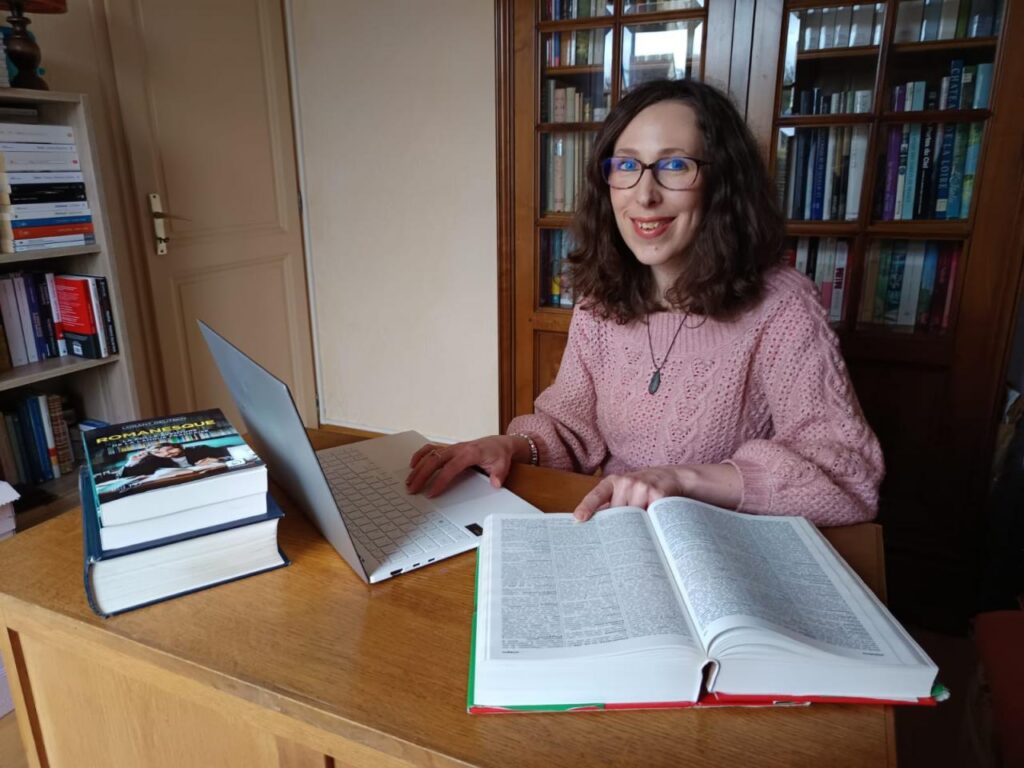
Who is Isabelle Meschi?
Isabelle translates from English and Italian into French. She set out on her translation adventure in 2011, after having obtained her degree in Literary, Technical and Scientific Translation in Milan back in 2009. Born in France to Italian parents, she has spent time living in both Milan, the city of her heritage, and London, the city of her heart which she calls her “soul city”. She specialises in children’s literature, tourism, cosmetics, cinema and marketing and she also works in the luxury and the transcreation sector.
Since AI began to be widely used in the translation industry a few years ago, MTPE jobs have become the new normal. MTPE, which stands for Machine Translation Post-Editing, consists of using AI to translate a document and then asking a translator to proofread the output (for peanuts).
And since we live in a world where everything must be available straightaway, this trend has also affected the subtitling sector with the real-time dubbing of videos, like on YouTube for example, where you can watch a video with AI subtitles or voice dubbing automatically generated in your mother tongue.
As for the latest mobile phones, they are now able to support real-time voice translation between different languages. This can undoubtedly be helpful for personal use, for example if you’re visiting a country whose language you’re not familiar with or if you want to watch a series or a movie in a foreign language you don’t speak, but the quality of the translation is a whole different matter.
Machines may be quicker than human translators, but they lack the accuracy and that human touch that can make all the difference for a brand.
Let’s be honest: if you’ve invested a lot of time and resources in finding the right tone of voice and the perfect slogans for your company, you don’t want to miss your chance to reach international audiences because ChatGPT inadvertently mistranslated your message or had a hallucination.
Similarly, a new trend is emerging in the literary field: some publishing houses are now using AI tools to translate books. My guess is that all the great authors of the past, like Émile Zola, Leo Tolstoy or William Shakespeare, are already turning in their graves at the prospect.
The big problem here is that every author has their own style; human translators know this and will strive to do it justice in their mother tongue, while a machine will simply translate the words literally without thinking about wordplay and the different nuances the author wishes to convey. As a result, an AI translated version will sound soulless or dull.
Translation is indeed more than translating mere words: it’s about conveying a message, adapting the content to the target audience, transferring meaning and feeling, and bridging gaps between different cultures. In other words, the translator must be good enough to make the audience think that what they are reading was originally written in their own language.
Progress can improve our lives, but do we really want to live in a world where translation is just “good enough”?
If nature gave us a brain, it’s because we were meant to use it. They say that AI tools can help us be more productive and save time but most translators will tell you the opposite because AI has no idea about context – and that’s key to a good translation. As a result, the translator ends up spending more time fixing AI’s mistranslations and hallucinations than if they had translated everything from scratch themselves. Besides, the more you rely on something, the less effort you put in. Translation is an art, and artists improve with time and experience. If you can already do your job, what’s the point of letting anyone or anything else do it for you? Your brain will thank you!
Some clients have a reputation to preserve and are looking for quality translations that can set them apart from their competitors. Therefore, my advice would be to find niche sectors that don’t yet use AI. There are many industries that still need the human touch a machine simply can’t provide. Identify them and start a new specialisation based on your own interests. Transcreation is also another option: so far, a machine can’t make puns or understand cultural connotations that make a copy unique. So seize the opportunity to prove that human translation still has a bright future ahead of it.
Would you like to discover the other 26 marketers’ and content creators’ visions for 2026? Download the whitepaper here.


