- Content Production
10 July 2026
From SEO to GEO: marketing in the AI-first era
As part of our whitepaper ‘The vision of 27 marketers and content creators for 2026’, we asked search marketeer Pieter...
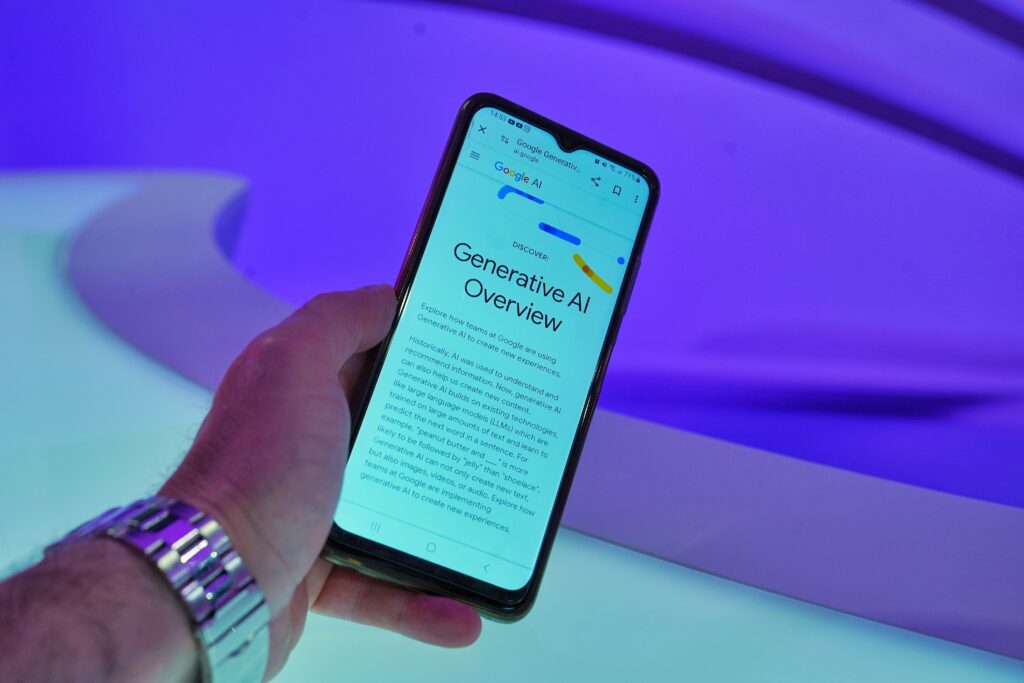
Google is rapidly changing the search landscape. With the rise of AI overviews – AI-generated summaries displayed at the top of search results – SEO is being turned upside down. What does this mean for you as a content marketer? How do you ensure your content remains visible, relevant, and even stands out in this new way of presenting search results?
In this blog, I explain what AI overviews are, how they affect search behavior, what impact they have on SEO, and how you can adjust your content strategy to win. Ready for a fresh perspective on SEO in the AI era? Keep reading.
AI overviews are short, clear summaries that Google shows at the top of search results. They are automatically generated using generative AI, such as Google’s Search Generative Experience (SGE). The goal is to provide users with a complete answer right away, including links to reliable sources that support the information.
For users, this means lightning-fast answers without clicking (zero-click searches). For you as a content marketer, this presents a new challenge: you need to stay visible and attractive enough to generate clicks.
Users increasingly get their answers directly in the search results, without clicking further. This puts traditional SEO under pressure, where top positions still meant a lot of traffic.
Key consequences:
In short: you no longer only need to rank for clicks, but also for visibility and impact within the AI block itself.
AI overviews extract the answer from your content, so fewer people click through.
Google increasingly trusts sources with proven expertise, experience, authority, and trustworthiness. E-E-A-T is no longer a buzzword, but a must.
Google pulls content from blogs, forums, YouTube videos, and encyclopedias. You no longer only compete with your sector, but with the entire internet.
Google decides which content appears in an AI overview. This is not always the best optimized or most relevant content.
Combined with other SERP features like people-also-ask, forum answers, shopping results, and more, the classic organic results are increasingly pushed down. This means classic links can almost be considered page 2 on Google.
So just because your tools report that you rank #1 doesn’t mean you are actually at the top. You might only appear halfway down the page.
Although Google has not given official guidelines yet, we see clear patterns in the content selected:
✅ Structure content as question and answer
Start paragraphs with a clear question and provide a concise answer of 1-2 sentences. Then elaborate with more detail.
✅ Write for people, but think like AI
Use clear headings (H2, H3) with relevant keywords. Work with bullet points, tables, and lists to make information easy to scan.
Naturally repeat important terms such as “AI overviews,” “SEO strategy,” and “organic traffic.”
✅ Build topical authority
Create content clusters around themes and internally link to relevant pages. Regularly update existing content with new insights.
✅ Publish original insights
Google prefers content that adds something new. Think customer stories, expert quotes, or data from your own practice.
✅ Pay attention to your reputation as a source
Clearly show who the author is, add sources, and ensure your website looks professional and trustworthy (HTTPS, privacy policy, design).
It’s both. AI overviews mark the end of shallow content that only targeted keywords. At the same time, it presents opportunities for those who truly add value, deliver quality, and share original insights.
The bar is higher, but also clearer. Those who take content seriously and invest in quality will gain an advantage.
Think beyond traffic alone. Visibility, authority, and influence become the new SEO KPIs. Write content that AI cannot easily generate: your opinion, cases, vision, and nuance are indispensable.
Use AI mainly as a sounding board, not a replacement. What makes you unique is your voice, not your prompt. This is something we firmly believe at Mediaforta and will continue to prioritize.


