- Content Production
10 July 2026
From SEO to GEO: marketing in the AI-first era
As part of our whitepaper ‘The vision of 27 marketers and content creators for 2026’, we asked search marketeer Pieter...

As part of our whitepaper ‘The vision of 27 marketers and content creators for 2026’, we asked copywriters Hilde Neven and Evi Maquoi for their vision for 2026 and two practical tips they would give to readers. You can read their response below.
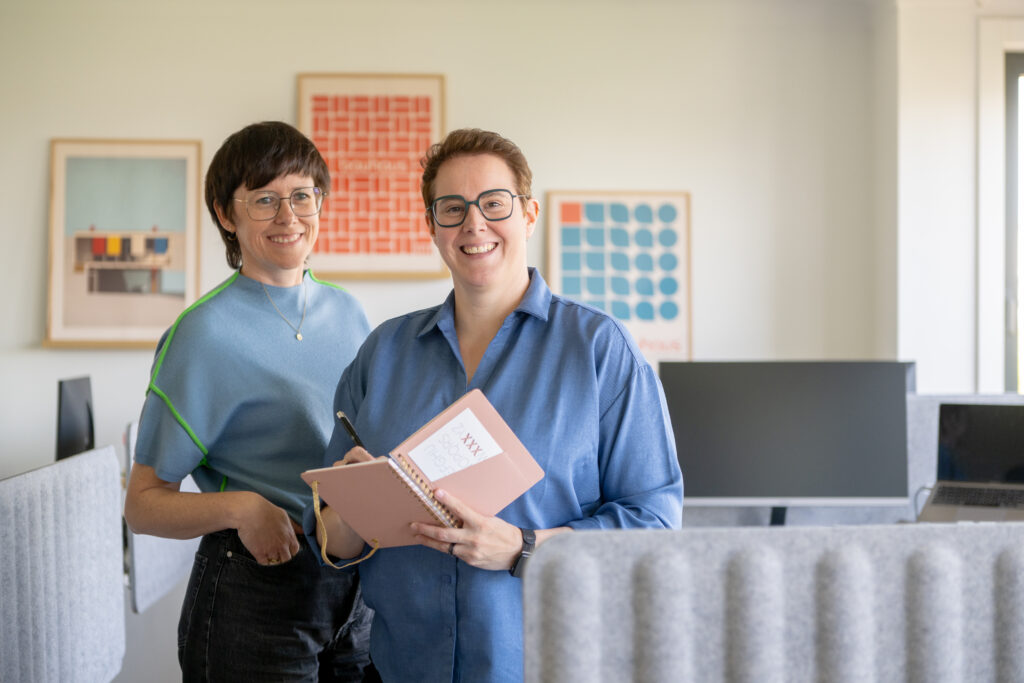
Who are Evi Maquoi and Hilde Neven?
Evi and Hilde are at the helm of the copywriting and translation agency ZINNIG. They share a love of language and storytelling, and settle for nothing less than texts that are flawless down to the last comma. Long before it became a buzzword, they were devoted fans of co-creation: the more eyes a text sees, the stronger it becomes.They like brainstorming, bouncing ideas around, and digging deep.
Content flows from algorithms faster than we can absorb it, let alone feel it. AI can generate in a nanosecond what once took a copywriter half a day and a tight deadline to produce. Convenient? Absolutely. But today’s endless stream of ‘rapid changes’ and ‘robust solutions’ is exhausting. Not to mention whether there’s still a need for us as storytellers and translators. Spoiler alert: photographers didn’t vanish when digital cameras arrived, and blenders didn’t put chefs out of business.
We believe the future of copywriting isn’t speed – it’s depth. It’s about quality over quantity. About creating content that moves people. Authentic, clear, real. But what does that mean in a world filled with empty words? For us, meaning comes from creating copy with character. Language with emotion. Words you don’t just read but feel. Whether it’s a tagline, a blog, or an interview. For a small business, a global company, a government agency, or a non-profit.
AI certainly has its place in our toolbox. It can help us brainstorm ideas or sketch a rough draft. But the real work starts where AI stops.
When it comes to inspiration, conviction, and connection, you need more than a well-crafted prompt. You need intuition. In-depth conversations. Interview questions that go beyond ‘What is it you do?’ And copywriters who truly listen. Who know when to stay silent and when to dig deeper. Who search for the perfect rhythm, the right tone, the one word that says it all.
In our increasingly automated and optimised world, authenticity is the ultimate edge. Copywriting isn’t about filling text boxes or pages; it’s about bringing words to life. Not for an algorithm, but for people. Our message for 2026? When it comes to internal and external communication, slow down. Give your words room to land.
An interview isn’t a hastily thrown-together checklist of questions. It starts long before the first word is spoken – with thoughtful preparation. What do you really want to know? What do you already know? And most importantly: what do you want your reader to take away?
Pick a time when your interviewee can speak freely, and a place where you can look each other in the eye. Ask open questions, be genuinely curious, and avoid a rapid-fire barrage. It’s better to ask: ‘When did you feel this was working?’ than ‘What was the outcome?’
Good questions build trust. Sometimes, that’s all it takes to draw out a compelling story. Sometimes, a well-timed pause can do more than the cleverest question. Give people time to think. Let them find the right words. And agree in advance that they can review the text afterwards. Not to polish quotes but to feel heard, respected, and understood.
The stronger the connection, the more willing people are to open up again. And the better you can tell their story.
Authentic content is inclusive. Not because it has to be, but because it’s right. When you write for people, you write for all people.
That goes beyond gender. Inclusive language also means making your texts accessible to those who read less fluently. To people with autism or ADHD. To those who don’t speak the jargon or don’t get the cultural references.
Avoid complicated sentences. Be clear about what you mean. Write without being patronising, condescending, or biased. Consider those with a disability or different needs. Consider how casually we write things like ‘your husband/wife’ without leaving room for other options.
Inclusive writing takes awareness and practice. But it always results in clearer, warmer, and more human communication. And that’s something we all need in 2026.
Would you like to discover the other 26 marketers’ and content creators’ visions for 2026? Download the whitepaper here.


